
Your Garage Door Springs Are Trying to Tell You Something
If you've ever had a garage door spring snap, you know it's not subtle. The loud bang, the door that suddenly won't budge, the sinking feeling that your morning routine just got a lot more complicated. For homeowners in Ocean City and the surrounding areas, a broken garage door spring is one of the most common — and most preventable — repair calls we get.
The good news is that garage door springs rarely break without warning. They give off signs for weeks or even months before they fail. Knowing what to look for can save you from an emergency situation, protect your family from a potentially dangerous break, and give you time to schedule a repair on your terms.
How Garage Door Springs Work
Before we get into the warning signs, it helps to understand what your springs actually do. Your garage door is heavy — most residential doors weigh between 130 and 350 pounds. The springs carry the vast majority of that weight, making it possible for your opener (or your arms) to lift the door with minimal effort.
There are two main types of garage door springs:
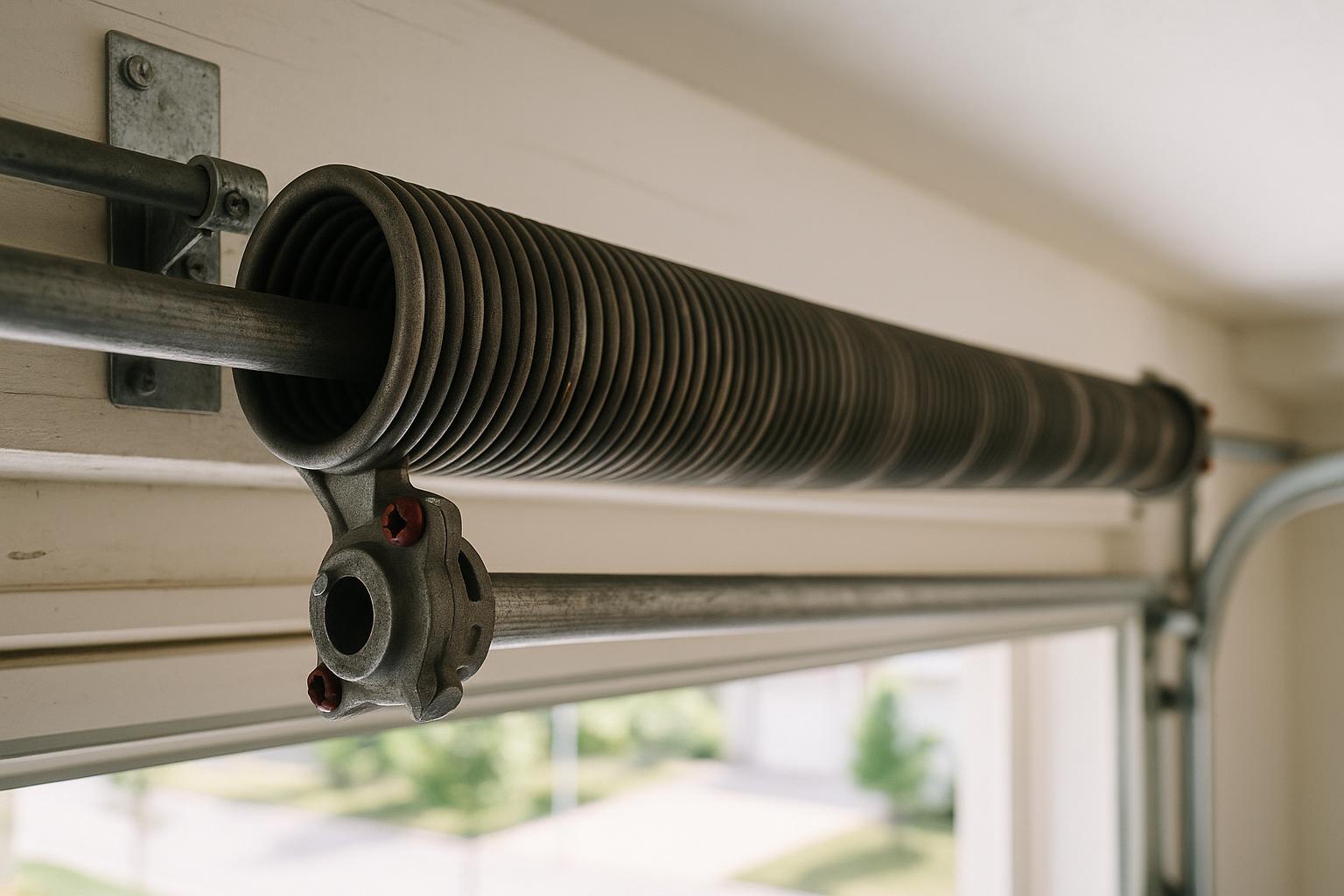
- Torsion springs — mounted on a metal shaft above the door opening. These twist and unwind to raise and lower the door. Most modern garage doors in Ocean City use torsion springs.
- Extension springs — mounted along the horizontal tracks on either side of the door. These stretch and contract to provide lifting force. They're more common on older installations.
Both types are under extreme tension, which is why spring replacement should always be handled by a professional. But identifying the warning signs? That's something every homeowner can and should do.
7 Warning Signs Your Garage Door Springs Are Failing
1. The Door Feels Heavier Than Usual
Try this simple test: disconnect your garage door opener by pulling the emergency release cord, then manually lift the door about halfway. A properly balanced door should stay in place on its own. If it feels noticeably heavy, slides back down, or requires real effort to lift, your springs are losing tension and nearing the end of their life.
2. The Door Opens Unevenly or Crooked
If one side of your garage door rises faster than the other, it usually means one spring is weaker than its counterpart. This uneven movement puts extra stress on your opener, your tracks, and the stronger spring — accelerating wear on all of them. If you notice your door looking crooked as it opens, don't ignore it.
3. You Hear Squeaking, Grinding, or Popping Sounds
Some noise during operation is normal, but new or worsening sounds are a red flag. Squeaking and grinding often indicate that a spring is corroding or losing lubrication. A loud popping or snapping sound during operation could mean a coil is starting to separate. In our coastal environment around Ocean City and Ocean Pines, moisture and salt air can accelerate this corrosion significantly.
4. Visible Gaps in the Spring Coils
Take a look at your torsion spring above the door. A healthy spring has tightly wound coils with uniform spacing. If you see a visible gap — a section where the coils have separated — the spring has already partially broken and a full break is imminent. This is one of the clearest visual indicators that you need spring replacement soon.
5. The Door Slams Shut or Closes Too Fast
When springs lose their ability to counterbalance the door's weight, gravity takes over. If your garage door drops quickly during closing instead of lowering in a smooth, controlled motion, the springs aren't doing their job. This is a safety concern, especially for households with children or pets.
6. Your Opener Is Straining
Your garage door opener is designed to move the door, not lift its full weight. When springs weaken, the opener has to work much harder. You might notice the motor running louder, the door moving more slowly, or the opener stopping mid-cycle. If your opener seems to be struggling, the problem is often the springs rather than the opener itself.
7. The Springs Are More Than 7-10 Years Old
Most standard garage door springs are rated for about 10,000 cycles — one cycle being a single open-and-close. For a household that uses their garage door four times a day, that works out to roughly seven years. If your springs are approaching or past that age, they're living on borrowed time, even if they seem fine right now.
Why You Shouldn't Wait for a Full Break
It's tempting to adopt a "if it isn't broken, don't fix it" mentality, but garage door springs are one area where that approach can backfire. Here's why:
- Safety risk: A spring under full tension stores an enormous amount of energy. When it snaps, the released force can cause serious injury or damage nearby objects. Extension springs without safety cables are particularly dangerous.
- You'll be stuck: A broken spring means your garage door won't open, at least not safely. If your car is inside, you're not going anywhere until the spring is replaced. For many homeowners in Berlin, Salisbury, and West Ocean City who rely on their garage as a primary entry point, this is a major disruption.
- Secondary damage: A failing spring puts extra strain on your opener, cables, and tracks. Waiting too long can turn a straightforward spring replacement into a more expensive multi-component repair.
- Emergency costs: Scheduling a planned spring replacement during normal business hours is always more affordable than calling for emergency service on a weekend morning when you're trapped.
What to Do If You Spot the Warning Signs
If any of the signs above sound familiar, here's what we recommend:
- Stop using the door if it seems unsafe. If the door is slamming shut, moving unevenly, or making alarming noises, limit use until a technician can inspect it.
- Don't attempt a DIY spring replacement. This is one of the few garage door repairs that is genuinely dangerous for non-professionals. The tension involved can cause severe injuries. We see the aftermath of DIY attempts more often than we'd like.
- Call a local garage door professional. A trained technician can assess your springs, determine how much life they have left, and replace them safely. At Ocean City Garage Door, we carry springs for most residential door sizes on our trucks, so most replacements can be completed in a single visit.
- Consider replacing both springs at once. If one spring is failing, the other is usually close behind since they were installed at the same time and have endured the same number of cycles. Replacing both at once saves you from a second service call down the road.
Keep Your Springs Healthy Longer
While springs won't last forever, regular maintenance can extend their lifespan. A few simple steps make a real difference:
- Apply a silicone-based garage door lubricant to the springs, hinges, and rollers every six months.
- Schedule an annual garage door maintenance inspection to catch small issues early.
- Keep an eye on your door's balance and listen for changes in how it sounds during operation.
Living in a coastal area like Ocean City or Bishopville means your springs are exposed to humidity and salt air year-round, which can accelerate rust and corrosion. Regular lubrication is especially important here.
We're Here When You Need Us
Whether you've spotted early warning signs or you're already dealing with a broken spring, Ocean City Garage Door is ready to help. We provide fast, professional spring replacement across Ocean City, Berlin, Salisbury, Ocean Pines, Bishopville, and West Ocean City. We show up on time, explain what needs to be done, and get your door working safely again. Give us a call today to schedule an inspection or repair.