
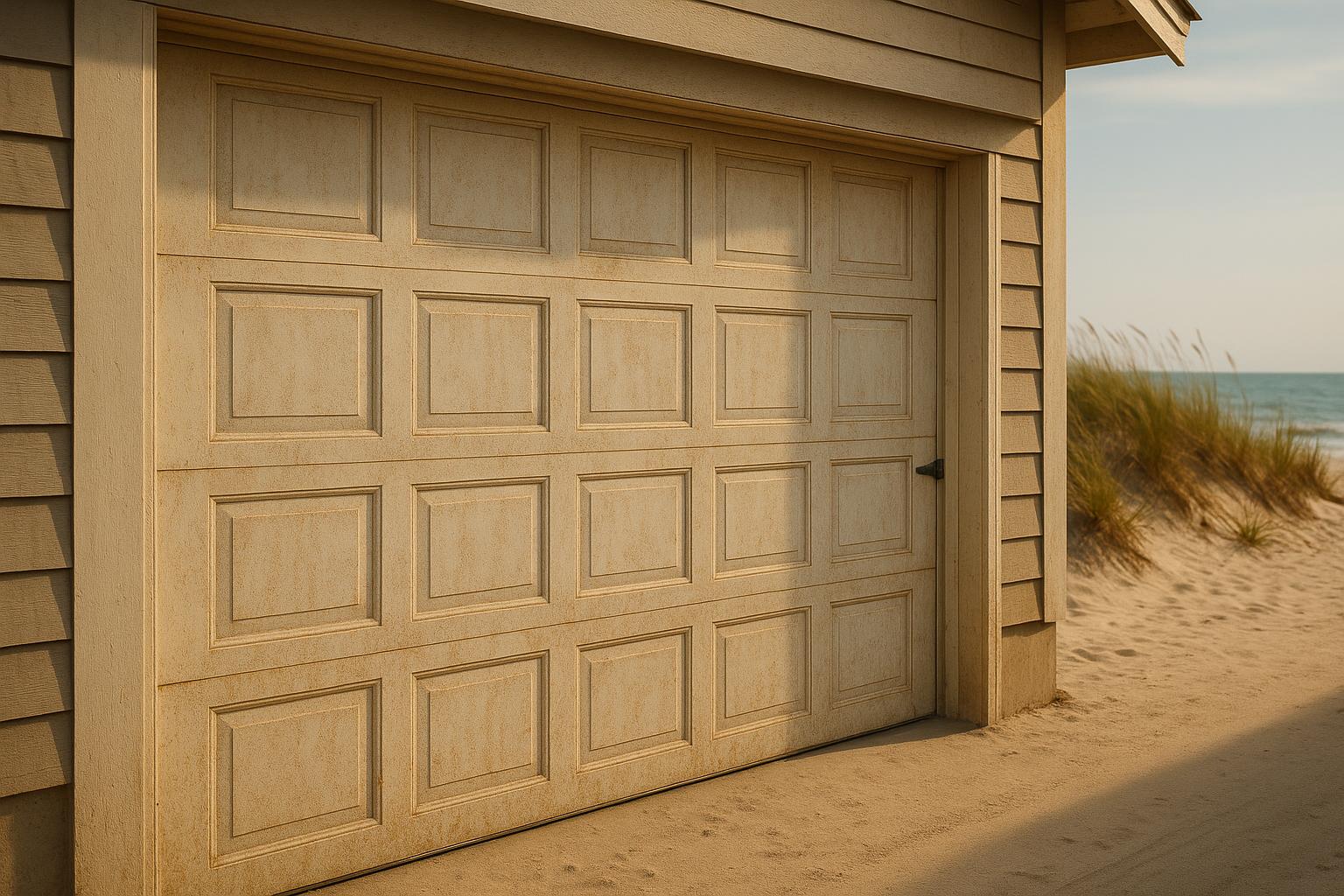
The Hidden Cost of Coastal Living on Your Garage Door
There's no question that living in Ocean City, MD comes with incredible perks — the beach, the boardwalk, and that unmistakable ocean breeze. But that same salty air that makes coastal living so appealing can quietly wreak havoc on one of the largest moving parts of your home: your garage door.
Salt air corrosion is one of the most common — and most overlooked — problems we see as a local garage door company. Homeowners from West Ocean City to Ocean Pines often call us wondering why their garage door is failing years before it should. In many cases, the answer is the same: the coastal environment has been slowly eating away at their hardware, springs, and panels.
Here's what you need to know about protecting your garage door from salt air damage, and how to keep it running reliably for years to come.
Why Salt Air Is So Damaging to Garage Doors
Salt air contains tiny particles of sodium chloride that settle on every exposed surface of your home. When these particles land on metal components — like your garage door's springs, tracks, hinges, rollers, and brackets — they accelerate a process called oxidation, which is just a fancy word for rust and corrosion.
Here's why this matters for your garage door specifically:
- Springs lose tension faster. Corroded torsion or extension springs become brittle and are more likely to snap unexpectedly. A broken spring isn't just inconvenient — it can be dangerous.
- Tracks and rollers degrade. When salt buildup accumulates in the tracks, rollers can't glide smoothly. This puts extra strain on your garage door opener and can cause the door to go off-track.
- Hinges and brackets weaken. These small but critical components hold your door together. Corrosion weakens them over time, leading to sagging panels or misalignment.
- Steel panels rust through. If your garage door is made of untreated or poorly coated steel, you may start to see rust spots, bubbling paint, or even holes forming in the panels themselves.
The damage doesn't happen overnight. It's a gradual process, which is exactly why it catches so many homeowners off guard.
Which Garage Door Materials Hold Up Best at the Shore
If you're installing a new garage door or replacing an aging one, material choice matters more here than it does inland. Here's a quick breakdown of how common garage door materials perform in a coastal environment like Ocean City:
Aluminum
Aluminum is naturally resistant to rust, making it one of the best choices for homes near the ocean. It's lightweight, low-maintenance, and available in a variety of styles. The trade-off is that aluminum can dent more easily than steel, but for corrosion resistance, it's hard to beat.
Fiberglass
Fiberglass garage doors won't rust or corrode at all, which makes them another excellent coastal option. They can mimic the look of wood without the maintenance headaches. However, fiberglass can become brittle over time with prolonged UV exposure, so look for doors with UV-resistant coatings.
Vinyl
Vinyl doors are virtually impervious to salt air. They won't rust, rot, or require painting. They're especially popular for homes in Bishopville and Berlin where homeowners want durability without constant upkeep.
Steel (with caveats)
Steel is the most popular garage door material nationwide, and it can work fine at the coast — but only if it has a high-quality, multi-layer finish. Look for doors with a baked-on polyester topcoat or a powder-coated finish. Budget steel doors with thin paint coatings will start showing rust within just a few years in our salty environment.
Wood
Real wood garage doors are beautiful, but they require the most maintenance in a coastal setting. Salt air, humidity, and moisture can cause warping, swelling, and rot. If you love the wood look, consider a composite or fiberglass alternative that mimics wood grain.
7 Ways to Protect Your Garage Door from Salt Air Damage
Regardless of what material your garage door is made from, there are practical steps you can take to extend its life and keep it functioning properly in our coastal climate.
- Rinse your garage door regularly. This is the single easiest thing you can do. Use a garden hose to rinse down the entire door — panels, hardware, and tracks — at least once a month. This washes away salt deposits before they can cause damage. During storm season or after nor'easters, rinse it more frequently.
- Lubricate moving parts. Apply a silicone-based lubricant to springs, rollers, hinges, and tracks every three to four months. This creates a protective barrier against moisture and salt while keeping everything moving smoothly. Avoid WD-40 for this purpose — it's a solvent, not a long-term lubricant.
- Inspect for rust spots early. Walk around your garage door every couple of months and look for any signs of rust, especially on springs, brackets, and the bottom panel. Catching rust early means you can treat it with a rust converter and touch-up paint before it spreads.
- Keep the weatherstripping intact. The rubber seal at the bottom of your garage door keeps out water, sand, and salt spray. If it's cracked or missing, replace it promptly. This is an inexpensive fix that makes a big difference.
- Touch up paint chips immediately. Any chip or scratch in your garage door's finish is an open invitation for rust. Keep a small container of matching touch-up paint on hand and address chips as soon as you notice them.
- Schedule annual professional maintenance. A trained technician can spot problems you might miss — like a spring that's starting to corrode internally or a track that's beginning to warp. Annual tune-ups are especially important for coastal homes in the Salisbury and Ocean City area.
- Upgrade corroded hardware proactively. If your technician finds that springs, rollers, or hinges are showing significant corrosion, don't wait for them to fail. Replacing worn hardware on your schedule is always safer and cheaper than dealing with an emergency breakdown.
When to Call a Professional
Some salt air damage is beyond the scope of a DIY fix. You should call a garage door professional if you notice any of the following:
- Your garage door is making grinding or scraping noises
- The door feels heavier than usual or struggles to open
- You see visible rust on the torsion springs above the door
- Panels are warping, cracking, or developing holes
- The door goes off-track or won't close evenly
- Your garage door opener is straining or running louder than normal
These are all signs that corrosion or wear has progressed to the point where professional repair or replacement is needed. Ignoring these warning signs can lead to a complete door failure — often at the worst possible time.
Living at the Coast Doesn't Mean Settling for a Short-Lived Garage Door
With the right material choices, a consistent maintenance routine, and periodic professional inspections, your garage door can last just as long here in Ocean City as it would anywhere else. The key is being proactive rather than reactive.
At Ocean City Garage Door, we work with homeowners and businesses across Ocean City, Berlin, Ocean Pines, Salisbury, Bishopville, and West Ocean City every day. We understand the unique challenges that come with maintaining a garage door in a coastal environment, and we're always happy to help — whether you need a quick tune-up, a spring replacement, or advice on choosing a new door that will stand up to the salt air for decades.
If it's been a while since your garage door had a checkup, give us a call. A little prevention now can save you a lot of headaches — and money — down the road.