
Your Garage Door Works Hard — Are You Taking Care of It?
Think about how many times you open and close your garage door each day. Twice? Four times? For most families in Ocean City, the garage door is the largest moving part of the home and one of the most frequently used entry points. Yet it's also one of the most neglected when it comes to regular maintenance.
We get calls every week from homeowners who are surprised when their garage door suddenly stops working, makes a terrible grinding noise, or comes off its tracks. In most cases, the problem didn't happen overnight — it built up over months or even years of skipped maintenance. The good news is that a little preventive care goes a long way toward keeping your garage door safe, quiet, and reliable for years to come.
The Short Answer: At Least Once a Year
At a minimum, your garage door should be professionally serviced once a year. Think of it like an annual checkup for your car — a trained technician can catch small issues before they turn into expensive repairs or dangerous failures.
That said, homeowners in coastal areas like Ocean City, Berlin, and Ocean Pines may benefit from servicing their garage doors twice a year. The combination of salt air, humidity, wind-driven sand, and seasonal temperature swings puts extra stress on garage door components. Springs fatigue faster, hardware corrodes more quickly, and weatherstripping deteriorates sooner than it would in an inland climate.
If your garage door sees heavy daily use — for example, if multiple family members come and go throughout the day or you use the garage as a primary entrance — you should lean toward that twice-a-year schedule.
What Does a Garage Door Tune-Up Include?
A proper garage door maintenance visit isn't just a quick visual inspection. Here's what a thorough tune-up should cover:
1. Visual Inspection of All Components
A technician will examine every part of the system — panels, tracks, springs, cables, rollers, hinges, brackets, and the opener. They're looking for signs of wear, rust, misalignment, fraying, and damage that could lead to a breakdown.
2. Lubrication of Moving Parts
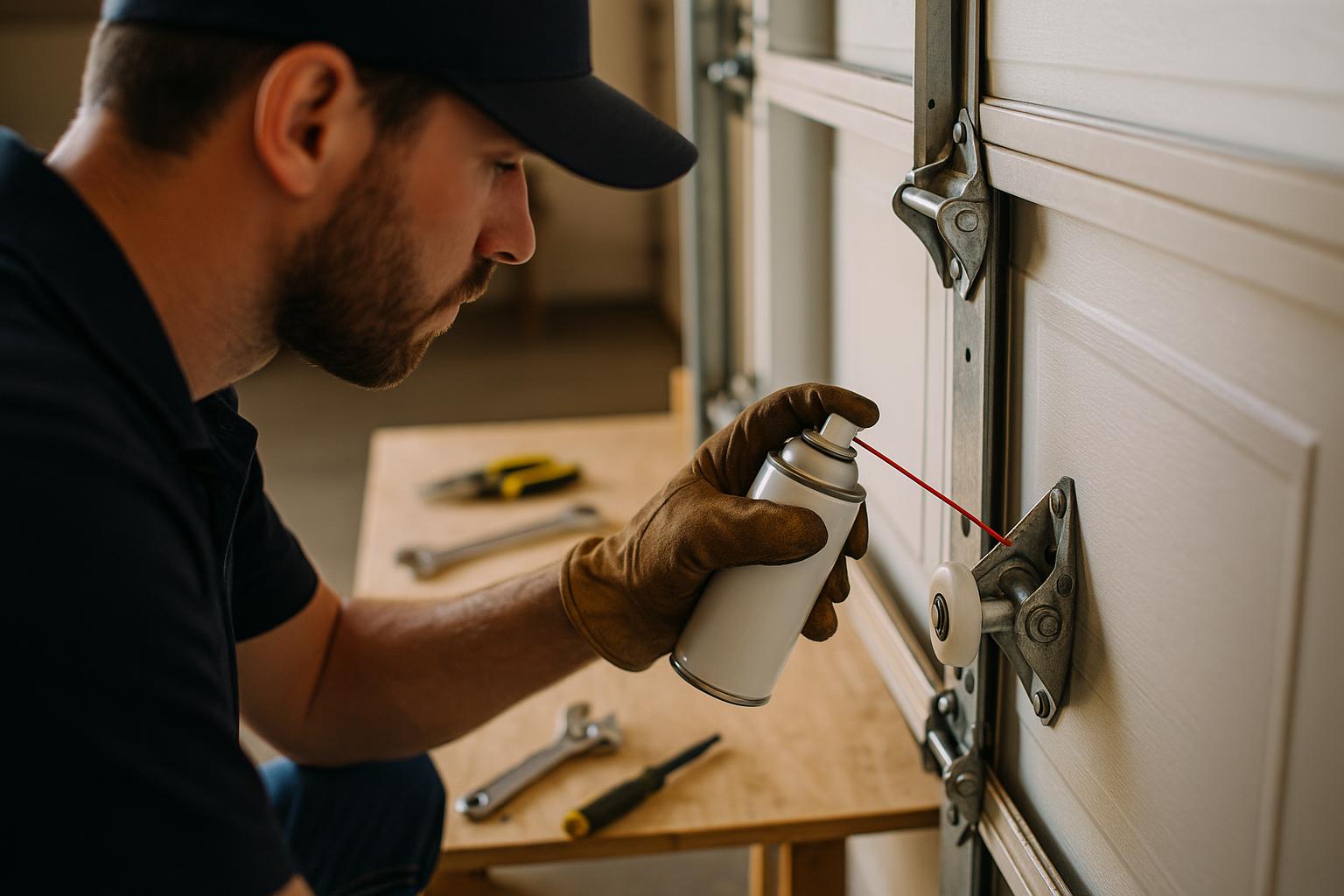
Garage doors have a lot of metal-on-metal contact. Rollers, hinges, springs, and bearings all need proper lubrication to operate smoothly and quietly. Using the right type of lubricant matters — standard WD-40 isn't ideal for most garage door parts. A professional will use a silicone-based or lithium-based lubricant designed for the job.
3. Spring Tension and Balance Test
Your garage door should stay in place when you manually lift it to about waist height and let go. If it slides down or shoots up, the springs are out of balance. An unbalanced door puts extra strain on the opener and can wear out components prematurely. Adjusting spring tension is one of the most important — and most dangerous — parts of maintenance, so it should always be left to a professional.
4. Track Alignment Check
Even a slight misalignment in the tracks can cause the door to bind, scrape, or come off the rails entirely. A technician will check that the tracks are properly aligned, level, and securely fastened to the wall and ceiling.
5. Safety Feature Testing
Modern garage doors have two critical safety features: the auto-reverse mechanism and the photoelectric sensors near the floor. Both are designed to prevent the door from closing on a person, pet, or object. During a tune-up, these features are tested to make sure they're functioning correctly. This is especially important for families with children.
6. Weatherstripping and Seal Inspection
The rubber seals along the bottom and sides of your garage door keep out rain, wind, insects, and debris. In Ocean City's coastal environment, these seals take a beating from storms and UV exposure. Cracked or missing weatherstripping should be replaced to protect your garage's interior and improve energy efficiency.
7. Hardware Tightening
The constant vibration of a garage door opening and closing hundreds of times a month can loosen nuts, bolts, and brackets over time. A technician will tighten all hardware to keep everything secure and reduce noise.
What You Can Do Between Professional Visits
You don't have to wait for your annual service appointment to take care of your garage door. Here are a few simple things you can do on your own throughout the year:
- Listen for unusual sounds. Grinding, squealing, popping, or scraping noises are early warning signs that something needs attention.
- Watch how the door moves. It should travel smoothly and evenly. Jerky movement, hesitation, or shaking can indicate worn rollers, a track issue, or a spring problem.
- Keep the tracks clean. Wipe down the inside of the tracks with a damp cloth to remove dirt, sand, and debris. Don't use lubricant on the tracks themselves — that can actually cause the door to slip.
- Rinse the door exterior. A quick rinse with fresh water every few weeks helps wash away salt residue, which is a major contributor to corrosion for homes near the beach.
- Test the auto-reverse. Place a roll of paper towels on the ground in the door's path and press the close button. The door should reverse when it contacts the object. If it doesn't, call a professional right away.
The Cost of Skipping Maintenance
We understand that scheduling maintenance for something that seems to be working fine can feel unnecessary. But consider the alternative. A broken spring replacement can cost several hundred dollars. A full garage door replacement — which sometimes becomes necessary when years of neglect cause irreversible damage to panels, tracks, or the opener — can run into the thousands.
Regular maintenance typically costs a fraction of what a major repair does. More importantly, it keeps your family safe. A garage door weighs several hundred pounds, and a failure — whether it's a snapped cable, a broken spring, or a door that falls unexpectedly — can cause serious injury.
When to Call for Service Between Checkups
Even with regular maintenance, issues can come up unexpectedly. Contact a garage door professional if you notice any of the following:
- The door reverses direction for no apparent reason
- The opener runs but the door doesn't move
- You see a visible gap between the door and the frame
- One side of the door hangs lower than the other
- A cable appears frayed or loose
- The door makes a loud bang (which often signals a broken spring)
If any of these happen, avoid trying to force the door open or closed. Using a malfunctioning garage door can make the problem worse and create a safety hazard.
Stay Ahead of Problems with Regular Maintenance
Your garage door is one of the hardest-working parts of your home, and here in Ocean City, it deals with conditions that most garage doors never face. A little preventive maintenance goes a long way toward avoiding costly repairs, extending the life of your door, and keeping your home safe and secure.
At Ocean City Garage Door, we offer comprehensive maintenance plans for homeowners across Ocean City, West Ocean City, Salisbury, Bishopville, and the surrounding communities. Whether your door just needs a tune-up or you've been putting off service for a few years, we're here to help. Give us a call to schedule your next maintenance visit — your garage door will thank you.